AI-Powered SEO Agent: Automate and Dominate in 2026
AI-Powered SEO Agent tools are transforming digital marketing. These autonomous systems analyze data, optimize content, and solve technical issues. This guide explores how they work, their benefits and challenges, and how they complement human expertise to create a dominant SEO strategy in 2026.

Imagine it is Monday morning. You have five tabs open. Each one shows a different SEO tool. You need to copy data from one spreadsheet to another. Then you must check Google Search Console for new keywords. This has been your routine for years. It is exhausting.
Now, picture a different scene. An AI-Powered SEO Agent does this work for you. It finds pages that need updates. It suggests internal links. It alerts you when rankings drop. All while you focus on strategy. This is not science fiction. It is the new reality of SEO. For those looking to go deeper, our guide on How to Build an AI Agent breaks down the technical process, while our comparison of Agentic AI vs Generative AI clarifies the core technology at play.
In 2026, the game will be changed. The question is, are you ready to play? This is the story of how AI SEO Agents are reshaping digital marketing. Let's explore what they are and why they matter for your business.
What is AI-Powered SEO Agent?
An AI-Powered SEO Agent is an autonomous digital employee, purpose-built for search engine optimization. Think of it as your most diligent, data-driven team member who never sleeps.
It doesn't just provide data—it acts. While traditional SEO tools give you spreadsheets and dashboards to interpret yourself, an AI SEO Agent analyzes, decides, and executes.
These agents combine several advanced technologies to function:
- Natural Language Processing (NLP): To understand search intent and content meaning, grasping the "why" behind a search, not just the "what".
- Machine Learning (ML): To learn from data trends and past results, constantly improving its recommendations and predicting ranking shifts.
- Real-Time Data Integration: To pull live information from your Google Search Console, analytics, and rank trackers.
- Automation Engines: To power workflows, auto-generate content briefs, suggest internal links, and scan for technical issues.
In practice, this means you can ask the agent to "find all blog posts with dropping traffic and update them," and it will handle the entire process from audit to content recommendations. It's the difference between having a map and a co-pilot who does the driving for you.
Why AI-Powered SEO Agents Gain Popularity in 2026?
The rise of AI-Powered SEO Agents isn't random. It's a perfect storm of technological maturity and market pressure. In 2026, SEO will become even more complex than ever. Search engines are smarter, competition is fierce, and the pace of change is relentless.
The tech giants are all-in. Google's own "Search Generative Experience" (SGE) has fundamentally changed the SERPs, making old optimization tactics obsolete. Microsoft is integrating AI across its ecosystem, making advanced intelligence accessible. The conversation has shifted from if AI will be used to how it will be automated.
The statistics tell a compelling story:
- Grand View Research projects the market will reach USD 82.23 billion by 2030.
- A recent Gartner report predicts that by 2029, over 80% of customer service and marketing interactions will be managed by Agentic AI, a trend SEO cannot ignore.
- According to a McKinsey analysis, companies adopting AI for marketing see a 5 and 15% increase in ROI on their digital activities, primarily through efficiency gains.
Now, let’s see how these agents work.
How Do AI SEO Agents Work?
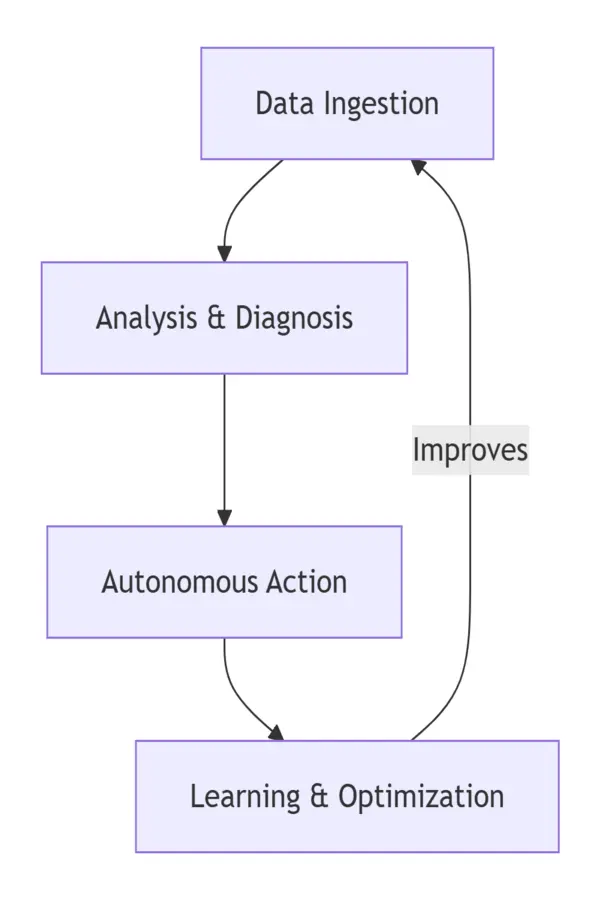
Think of an AI-Powered SEO Agent as a highly skilled, automated specialist. It operates through a continuous, intelligent loop. This is a cycle of data gathering, analysis, action, and learning.
1. Data Ingestion
The agent first connects to all your vital data sources. It pulls live information from Google Search Console, Google Analytics, your rank tracker, and even your CRM. It creates a complete, real-time picture of your site's health and audience.
2. Analysis & Diagnosis
Using machine learning, it processes this data to find patterns. It diagnoses why a page is losing rankings, identifies new keyword opportunities, and spots content gaps you can exploit against competitors. It moves from "what" is happening to "why" it's happening.
3. Autonomous Action
This is the core of an "agent." It doesn't just report—it acts. Based on its diagnosis, it can automatically generate a content brief, suggest internal links, submit a sitemap, or alert your team to a critical site speed issue.
4. Learning & Optimization
The agent monitors the results of its actions. It learns which content updates boost traffic and which technical fixes deliver the most value. This creates a self-improving system where your SEO strategy becomes more intelligent and effective with every cycle.
The entire workflow is a closed loop, which can be visualized as follows:
Applications of AI-Powered SEO Agent
The true power of an AI-Powered SEO Agent lies in its versatility. It's not a one-trick tool. It acts as a force multiplier across every facet of SEO, from technical audits to content creation.
Automated Technical Audits
The agent continuously crawls your website like a dedicated engineer. It proactively identifies and can often fix common technical issues. It alerts you to new 404 errors, spots site speed regressions, and ensures your sitemap is always up-to-date and submitted.
Intelligent Content Optimization
This is where the agent shines. It analyzes top-ranking content for your target keywords. Then, it generates comprehensive briefs. It suggests optimal headings, semantic keywords, and even content gaps to fill. It helps your writers create winning content from the start.
Proactive Rank Tracking and Reporting
Move beyond simple rank checks. The agent monitors your keyword positions and correlates fluctuations with Google algorithm updates or competitor movements. It then generates plain-English insights, telling you why rankings changed, not just that they changed.
Strategic Content Gap Analysis
The agent constantly scans your competitors. It uncovers the keywords they rank for that you don't. This reveals hidden opportunities for new content or existing pages you can easily update to capture more traffic, turning competitors' strategies into your roadmap.
Dynamic Internal Linking
It automates one of the most tedious SEO tasks. The agent suggests relevant internal links as you publish new content. It also identifies "orphan" pages that lack internal links, ensuring your site's authority is distributed efficiently and Google can crawl your site effectively.
Top 5 AI-Powered SEO Agents in 2026
Based on 2025 analyses from SEO industry sources, popularity is gauged by user adoption, mentions in expert reviews, and market share indicators like subscriber counts and integration frequency. The top performers emphasize automation for keyword research, content optimization, and AI search visibility (e.g., in ChatGPT and Google AI Overviews). Here's the ranked list:
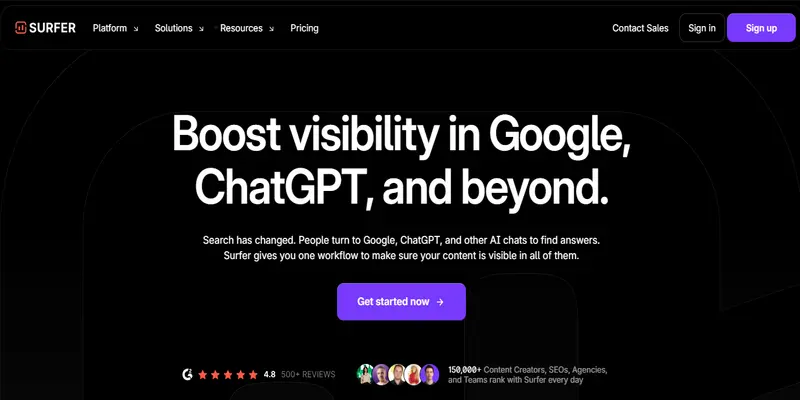
1. Surfer SEO – Most Popular Choice
Surfer SEO is the go-to AI SEO tool for agencies and content teams, loved for its real-time optimization and proven ranking boosts.
Key Features
- Real-time SERP-based content scoring.
- Keyword clustering & topical maps.
- AI content briefs + Google Docs/WordPress integration.
- Strong AI search (AEO) optimization.
Pros
- Trusted by 150,000+ content creators, SEOs, agencies, and teams.
- Boosts rankings 25-40% with data-backed edits; intuitive for teams.
- Scales content production without quality loss.
- Strong multilingual support and frequent updates
Cons
- Higher tiers needed for unlimited projects.
- Essential: $99/month (annual)
- Scale: $219/month
- Enterprise: Custom (~$999/month)
- 7-day free trial
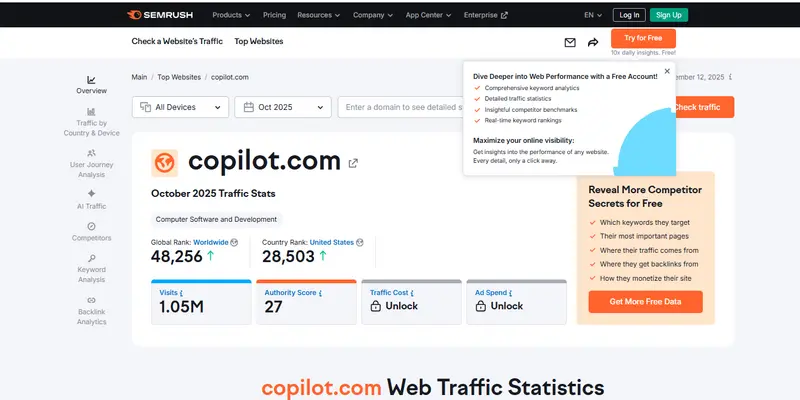
2. SEMrush Copilot – Enterprise Favorite
SEMrush Copilot is all-in-one platform with a powerful AI assistant used by over 10 million marketers.
Key Features
- AI keyword gaps & traffic forecasts.
- Technical fixes + backlink audits.
- AI Overview tracking and 60+ tools.
- Predictive content clustering.
Pros
- All-in-one for enterprises (10M+ users).
- Real-time alerts save hours.
- Excels in ROI forecasting and agency reporting.
- Integrates with Google Analytics for seamless workflows.
Cons
- Expensive for small users.
- Some AI outputs need editing.
- Pro: $149.95/month
- Guru: $269.95/month
- Business: $549.95/month
- Free limited account.
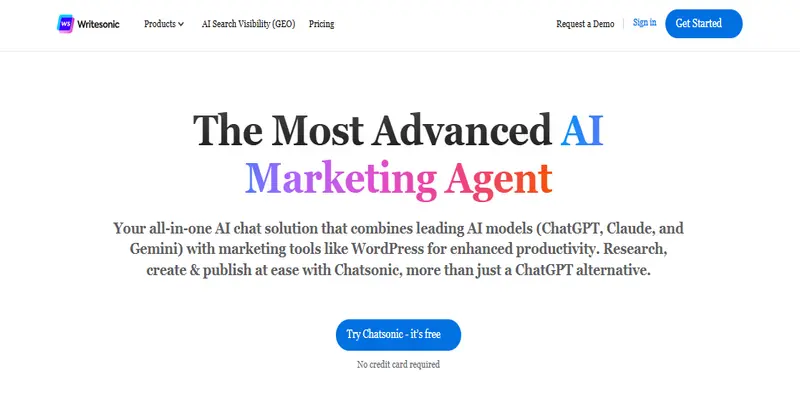
3. Writesonic (Chatsonic SEO Agent) – Fastest Rising
Chat-based AI that handles the entire SEO workflow from research to publishing.
Key Features
- Chat-based keyword research and on-page optimization.
- AI content generation with Ahrefs/SEMrush integration.
- Multi-LLM support (GPT-4o, Claude, Gemini) for workflows.
- One-click WordPress publishing and AI traffic analytics.
Pros
- Automates full SEO cycles for agencies; 38% conversion lifts reported.
- Affordable for solopreneurs; excels in multilingual/global SEO.
- Fast ideation to publish (under 20 mins for long-form).
Cons
- Generated content needs brand-voice tweaks.
- Lighter on technical audits.
- Free: Limited credits
- Individual: $20/month
- Standard: $99/month
- Enterprise: Custom
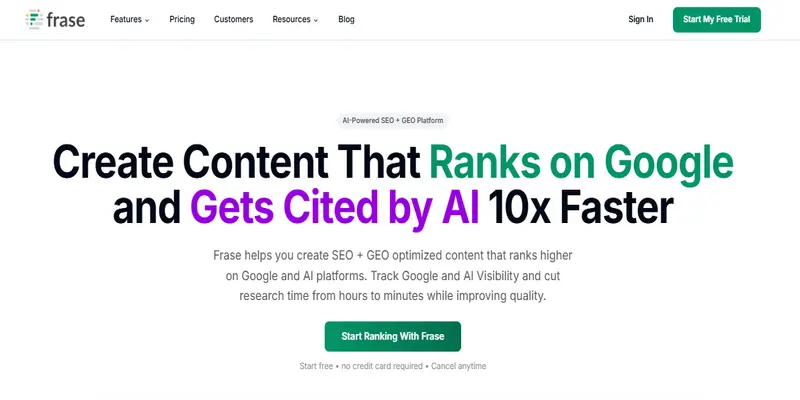
4. Frase – Best for Content Creators
Frase focuses on intent-driven outlines and quick research-to-draft workflows.
Key Features
- SERP-based outlines, "People Also Ask" extraction, and topic modeling.
- Content scoring against top results with intent matching.
- AI FAQs and collaboration workflows.
- Integration with Google Search Console for real-time insights.
Pros
- Improves engagement 20-30% via intent-focused content.
- Beginner-friendly; great for blogs/guides.
- Automates research, cutting planning time by 50%
Cons
- Weak on backlinks and site-wide technical SEO.
- Costs add up for teams.
- Starter Option: $45/month
- Professional: $115/month
- Scale: $229/month
- Advanced: $349/month
- Enterprise: Custom
- Free 30-days trial
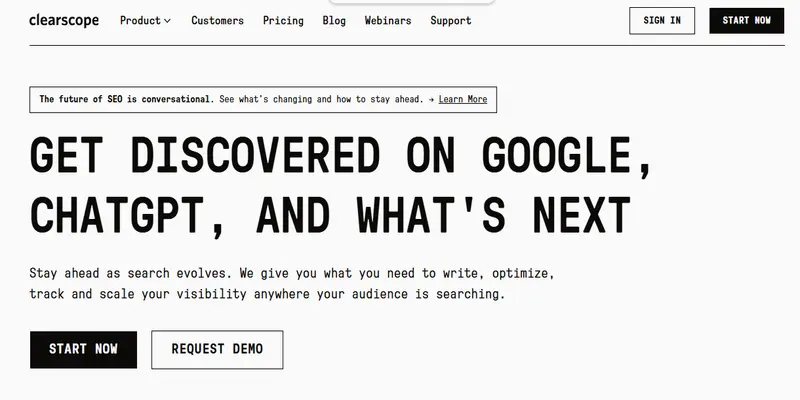
5. Clearscope – Precision Choice
Clearscope delivers the most accurate semantic keyword and grading system for topical authority.
Key Features
- Semantic keyword suggestions and real-time content grading.
- Competitor analysis with readability/SEO scoring.
- Google Workspace integration for in-doc edits.
- Topical authority builder for long-term rankings
Pros
- Precise scoring leads to 25%+ ranking gains.
- Time-saver for revisions; high accuracy in suggestions.
- Ideal for e-commerce/content teams.
Cons
- No built-in content generation.
- No free tier.
- Essential: $129/month
- Business: $399/month
- Enterprise: Custom
Benefits and Challenges of Using AI SEO Agents
Adopting an AI-Powered SEO Agent is like hiring a super-powered intern who never sleeps. But even superpowers have their kryptonite. Let's explore both sides.
The Bright Side: Transformative Benefits
1. Unmatched Efficiency & Scale
Manual SEO is slow. An AI agent accelerates everything. It can analyze thousands of pages in minutes. It identifies site-wide issues while your team sleeps. This frees your experts to focus on high-level strategy, not tedious tasks.
2. Data-Driven Precision
Human intuition has its place. But data rules. AI agents process colossal datasets. They spot patterns invisible to the human eye. This leads to smarter keyword targeting and more accurate predictions about what will rank.
3. Proactive Problem-Solving
You don't have to wait for a rankings drop. AI agents monitor your site 24/7. They alert you to issues before they impact traffic. They can even fix common problems automatically. This is proactive defense for your organic visibility.
4. Democratization of SEO
Not every business can afford an SEO agency. AI agents make advanced tactics accessible via AI marketing plan. Small teams can now compete with enterprises. They level the playing field through automation and intelligence.
The Reality Check: Key Challenges
1. Significant Financial Investment
This power isn't cheap. Robust AI SEO agents command premium prices. They often cost hundreds of dollars per month. This can be a barrier for small businesses and solo entrepreneurs.
2. The "Black Box" Dilemma
Sometimes, the AI's reasoning isn't clear. It might recommend a change without a transparent explanation. This requires a leap of faith. You must trust the machine's logic, which can be uncomfortable for seasoned experts.
3. Over-Reliance Risk
Automation is a tool, not a replacement for strategy. The danger is becoming complacent. If you blindly follow every AI recommendation without understanding the "why," you risk losing the strategic oversight that drives long-term success.
4. Integration Hurdles
Connecting these agents to your existing tech stack can be complex. They require access to APIs and data sources. Setting up the initial workflows demands time and technical know-how.
AI-Powered SEO-Agent Vs Chatbot: What are the Key Differences?
Many people confuse AI SEO agents with standard chatbots like Joyland AI Chatbot and Janitor AI Chatbot. While both use artificial intelligence, they serve fundamentally different purposes. Understanding this distinction is crucial for making the right investment.
Core Purpose: Task Execution vs. Conversation
An AI-Powered SEO Agent is designed for autonomous task execution. Its primary goal is to do things—audit websites, optimize content, and build reports without constant human supervision.
A Chatbot is designed for conversation and query response. Its primary goal is to answer questions and simulate human-like dialogue, whether for customer service or general information.
Key Differences at a Glance
| Feature | AI-Powered SEO Agent | Standard Chatbot |
|---|---|---|
| Primary Function | Executes complex SEO workflows | Engages in conversational dialogue |
| Autonomy Level | High - works independently once configured | Low - requires user prompts for every action |
| Output | Data reports, optimized content, technical fixes | Text responses, answers to questions |
| Integration | Connects to SEO tools (Google Search Console, Analytics) | Connects to messaging platforms (WhatsApp, Facebook) |
| Learning Ability | Improves based on performance data and results | Improves conversational understanding |
Why This Matters for Your Business?
Choosing between them depends on your needs:
- Need to automate SEO operations? You need an AI SEO Agent.
- Need to handle customer inquiries at scale? You need a Chatbot.
How to Choose the Right AI SEO Agent for Your Business
Selecting an AI SEO agent isn't about finding the "best" tool. It's about finding the right tool for your specific situation. Here’s a strategic framework to guide your decision.
1. Diagnose Your Primary SEO Pain Point
Start by identifying your biggest bottleneck. Are you struggling with content creation, technical health, or keyword strategy? An agent that excels in content generation won't solve a core web vitals problem. Choose a tool that directly targets your most urgent need.
2. Scrutinize the Level of Autonomy
Agents vary in how independently they operate. Ask the vendor: What specific tasks can it perform without human approval? Can it automatically submit a sitemap after detecting a new page, or does it just send an alert? The more autonomy, the more time you save.
3. Audit Your Tech Stack Compatibility
An AI agent is only as good as its connections. Verify it integrates seamlessly with your essential platforms:
- Google Search Console and Google Analytics.
- Your CMS (WordPress, Webflow, etc.).
- Your rank-tracking software.
- Poor integration creates data silos and manual work, defeating the purpose.
4. Evaluate the Learning Curve and Support
Consider your team's technical expertise. A powerful but complex agent can stall if no one can use it effectively. Look for intuitive interfaces, comprehensive documentation, and responsive customer support to ensure a smooth adoption.
5. Validate with Real-World Case Studies
Don't just look at feature lists. Ask for case studies or results from businesses similar to yours—in size, industry, and SEO maturity. Concrete evidence of ROI is the most reliable indicator of value.
How to Decide Between AI SEO Agent and Human SEO Agent
This isn't about one replacing the other. It's about strategic partnership. The most successful SEO strategies in 2026 leverage both for what they do best.
The Strategic Division of Labor
Think of it as building a high-performance team where each member plays to their strengths.
Choose an AI SEO Agent for:
- Scalable, Data-Intensive Tasks: Processing thousands of keywords, site-wide technical audits, and real-time rank tracking.
- 24/7 Monitoring & Execution: Immediate alerts for site outages or ranking drops, and automated fixes for common issues.
- Data-Driven Pattern Recognition: Identifying ranking correlations and content opportunities across massive datasets that would take humans weeks to analyze.
Rely on a Human SEO Agent for:
- Strategic Planning & Creative Vision: Developing the overall SEO roadmap and building a topical authority strategy that aligns with brand goals.
- Nuanced Interpretation: Understanding user search intent beyond keywords and crafting content that resonates emotionally and contextually.
- Complex Problem-Solving: Diagnosing subtle algorithm update impacts and managing high-stakes relationships with publishers for link-building.
The Ideal Partnership in Action
In practice, this looks like:
- The AI Agent identifies a cluster of pages with declining traffic and suggests technical optimizations based on competitor analysis.
- The Human Expert interprets these findings, prioritizes them based on business goals, and crafts a creative content strategy to reclaim relevance.
- The AI Agent then executes the technical optimizations and generates a first draft of the new content brief.
- The Human Expert refines the brief, injects brand voice and unique insight, and oversees the final publication.
This synergy creates a powerful flywheel: the human provides strategic direction, and the AI provides the scalable execution and data insights to make that direction effective.
FAQs on AI-Powered SEO Agents
1. Can an AI SEO Agent fully replace my SEO team?
No. It acts as a powerful force multiplier, handling data-intensive and repetitive tasks. This frees your human experts to focus on high-level strategy, creative content, and complex problem-solving that requires nuanced understanding.
2. How secure is my data with these platforms?
Reputable providers (like Semrush, Jasper) invest heavily in enterprise-grade security, often including SOC 2 compliance and encryption. Always review their data governance policies, especially regarding how they use your data to train their models.
3. Will Google penalize my site for using AI-generated content?
Google's stance is that it rewards quality content, regardless of how it's created. Their focus is on EEAT (Experience, Expertise, Authoritativeness, Trustworthiness). AI-generated content that is factually accurate, valuable, and edited by a human to add unique value does not get penalized. Pure, unedited AI spam does.
4. What's the typical setup and learning curve?
Implementation varies. Most tools can be integrated via API in hours, but configuring complex workflows and training the agent on your specific goals can take days to weeks. User-friendly interfaces have shortened the learning curve significantly.
5. Can these tools handle local SEO?
Yes, but with varying degrees of effectiveness. Key capabilities include optimizing Google Business Profiles, managing local citations, and generating localized content. The depth of these features differs by platform, so verify this if local SEO is a priority.
Conclusion
The rise of AI-Powered SEO Agent tools marks a fundamental shift from manual optimization to intelligent, automated growth. These systems are not here to replace SEOs but to redefine their role. The future belongs to those who can effectively partner with AI—leveraging its unparalleled speed and data-processing capabilities to execute strategy while focusing their human expertise on creative direction, brand storytelling, and big-picture thinking.
The question is no longer if you should adopt this technology, but how you will integrate it to build a more resilient, data-informed, and scalable SEO function. The most successful businesses will be those that view AI not as a tool, but as a collaborative team member.